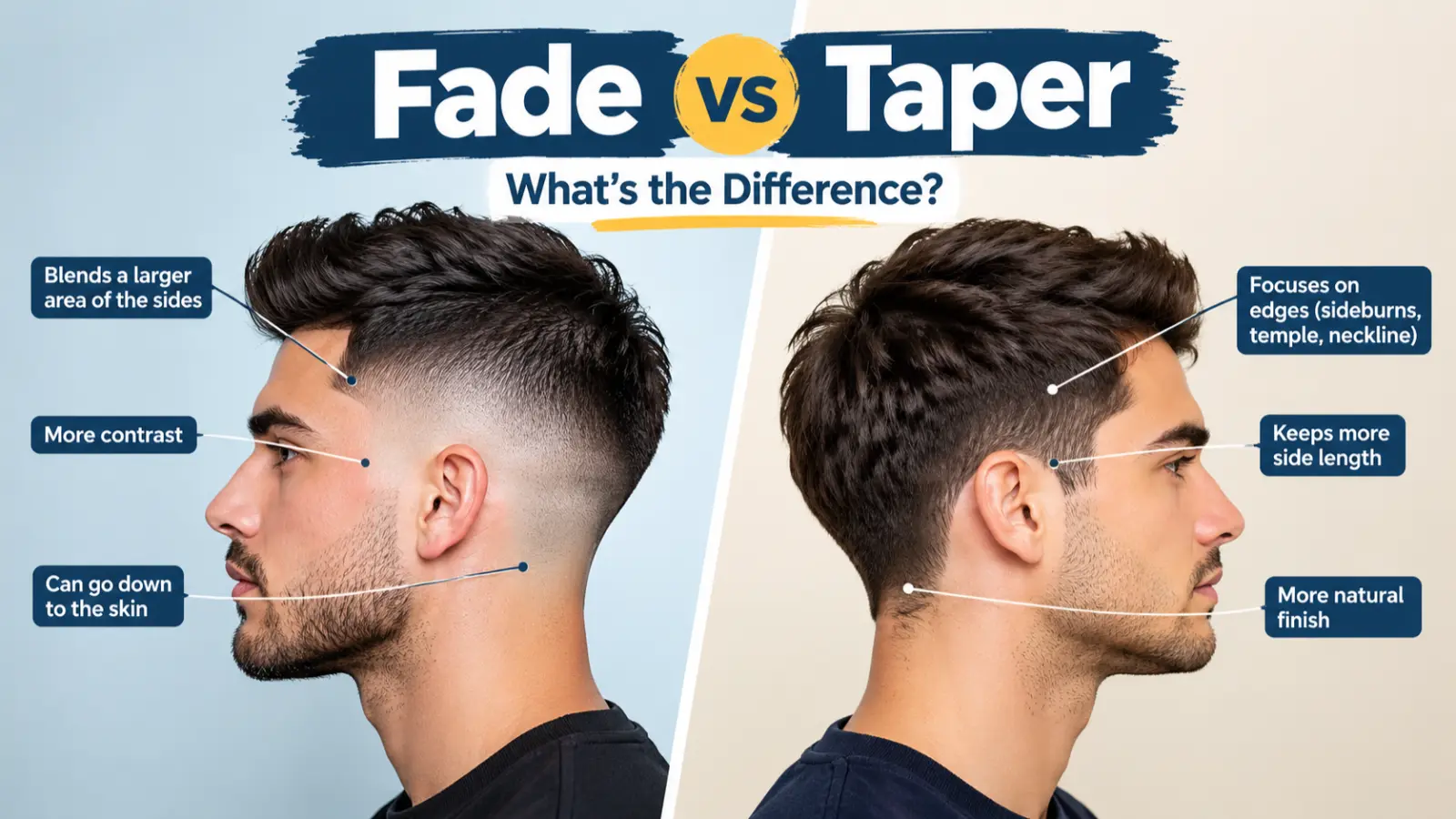
A taper gradually shortens hair mainly around the sideburns and neckline while keeping more length on the sides.
A fade generally blends a broader area of the sides and back into progressively shorter hair, sometimes down to the skin.
The biggest differences are coverage, contrast, hair length, and how the cut grows out.
Key Takeaways
- A taper keeps more hair around the sides and creates a softer, more natural finish.
- A fade covers more of the sides and back and usually creates stronger contrast.
- A fade can be low, mid, high, or skin/bald, depending on where the blend starts and how short it gets.
- A low fade and low taper are not necessarily the same because a fade usually covers a broader area.
- If you are unsure, tell your barber where you want the blend, how short you want the bottom, and how much side weight you want to keep.
What Is the Difference Between a Fade and a Taper?
The easiest way to understand fade vs taper is to look at where the hair is shortened and how much hair remains.
Both haircuts use a gradual transition from longer hair to shorter hair. The difference is mainly the area being blended.
A taper is usually concentrated around the sideburns, temples, and neckline. More of the hair on the sides remains intact, so the overall haircut keeps more natural fullness.
A fade generally extends the blend across a larger portion of the sides and back. Depending on the type of fade, the shortest section may be very short or reach bare skin.
One important detail: barbers and haircut guides do not always use these terms in exactly the same way. Some use “fade” broadly for a blended haircut, while others reserve “fade” for a more extensive or skin-close transition. That is why describing the desired result-or showing a reference photo-is often more reliable than using one word alone.
Fade vs Taper: Side-by-Side Comparison
| Feature | Taper | Fade |
|---|---|---|
| Main focus | Edges, sideburns, temples, neckline | Larger area of sides and back |
| Side length | More length retained | More hair removed |
| Contrast | Usually softer | Usually stronger |
| Scalp exposure | Usually limited | Can be noticeable, especially with skin fades |
| Common types | Classic, low, temple, neck | Low, mid, high, skin/bald |
| Overall appearance | Natural and understated | Sharper and more defined |
| Grow-out | Usually less noticeable | Short regrowth can become noticeable sooner |
| Best for | Keeping side fullness | Creating stronger side contrast |
The distinction is therefore not simply “taper = short” and “fade = shorter.” Placement and coverage matter just as much as length.
What Is a Taper Haircut?
A taper haircut gradually reduces hair length toward the edges of the haircut.
Instead of removing a large section of hair from the sides, the barber concentrates the shorter blend around areas such as the neckline and sideburns.
This allows you to keep more weight and fullness around the sides while still getting a clean finish.
Classic Taper
A classic taper has a relatively conservative transition. The hair becomes shorter as it approaches the neckline and around the ears, but the sides generally retain noticeable length.
It can work well with many hairstyles on top, including comb-overs, textured styles, side parts, and longer cuts.
Low Taper
A low taper keeps the shorter transition close to the lower edges of the haircut.
It is useful if you want your haircut cleaned up without dramatically changing the appearance of the sides.
Temple and Neck Tapers
A temple taper emphasizes the area around the temples and sideburns, while a neck taper focuses more heavily on the neckline.
These localized approaches can give you a polished appearance while preserving more of your original hair shape.
Tip: If you want your sides to remain relatively full but want the edges cleaned up, ask your barber about a low or subtle taper.
What Is a Fade Haircut?
A fade haircut creates a gradual transition through a larger section of the sides and back.
The hair becomes progressively shorter toward the lower portion of the haircut. The exact result depends on the fade’s height and how short the barber takes the bottom.
Common fade categories include low, mid, high, and skin fades.
Low Fade
A low fade begins relatively close to the ears and lower sides of the head.
It provides more contrast than a localized taper while keeping the transition relatively low.
It can be a useful middle ground if you want a noticeable fade without taking the blend high up the sides.
Mid Fade
A mid fade starts higher than a low fade and creates a more visible transition across the sides.
It provides a balance between the subtle placement of a low fade and the stronger contrast of a high fade.
High Fade
A high fade moves the transition considerably higher on the sides.
Because more side hair is removed, the contrast between the top and sides becomes more pronounced.
Skin or Bald Fade
A skin fade, also called a bald fade, takes the shortest portion down to bare skin.
This creates the greatest amount of scalp exposure and a particularly sharp contrast between the longer hair above and the skin-level section below.
Important: “Low,” “mid,” and “high” describe where the fade sits. “Skin” describes how short it gets. These are different characteristics, so you can have a low skin fade or a high skin fade.
Low Fade vs Low Taper
This is one of the most common sources of confusion.
Both styles keep the transition relatively low, but they do not necessarily remove hair from the same area.
A low taper usually concentrates the shortest work around the perimeter-especially the sideburns and neckline-while keeping more hair through the surrounding sides.
A low fade generally carries the blend across a broader lower section of the sides and back.
So, if you want more side weight, a low taper may be closer to what you are picturing. If you want more continuous fading and stronger contrast, a low fade may be closer.
Is a Taper Just a Low Fade?
Not exactly.
They can look similar because both can have a relatively low transition. The key difference is usually the amount of the sides being blended.
A low fade can still create a noticeable blended area across the lower sides, while a taper generally keeps the shortest work more localized around the edges.
That difference becomes much easier to see when the barber leaves significant side weight above the sideburns and neckline.
Fade vs Taper for Hair Type and Face Shape
There is no universal haircut that works identically for everyone.
Your hair density, texture, growth pattern, head shape, face shape, and preferred styling routine can all affect the result.
Thick Hair
If you have thick or dense hair, a fade can remove some side bulk and create a cleaner outline.
A taper can also work well if you want to preserve some of that fullness.
Fine or Thin Hair
If your hair is fine or thinning, removing a large amount of side hair can increase visible scalp contrast.
A more conservative taper or low blend may preserve more visual fullness.
That does not mean fades are automatically unsuitable for fine hair. The height and length of the fade can be adjusted.
Curly or Coily Hair
Both fades and tapers can work with curly or coily hair.
A fade can create a strong contrast between textured hair on top and shorter sides, while a taper can preserve more volume around the sides and create a softer transition.
Face Shape
Face shape can be useful when discussing haircut proportions, but it should not be treated as a strict rule.
For example, a higher fade removes more hair from the sides and can change the apparent outline of the head, while a taper preserves more side volume.
Your barber can consider your head shape and hair growth pattern along with your face shape rather than relying on a simple chart.
Maintenance and Grow-Out
One practical difference between a fade and a taper is how noticeable the haircut becomes as the hair grows.
A very short fade has a high-contrast starting point. As the hair grows, that contrast can soften relatively quickly.
A taper generally starts with more retained length, so the transition can appear less dramatic as it grows.
How long either haircut looks fresh depends on your hair-growth rate, hair color, texture, the exact cut, and how sharp you want the style to remain. There is no single maintenance schedule that applies to everyone.
If you prefer fewer trips to the barber, explain that during the consultation. Your barber can adjust the blend and length accordingly.
Key Takeaway: A haircut that looks perfect immediately after a visit is not necessarily the haircut that will fit your routine best. Consider how you want it to look one or two weeks later, too.
How to Tell Your Barber Exactly What You Want
Simply saying “give me a fade” can leave several important details unanswered.
For a more predictable result, explain these four things:
1. Say Where You Want the Blend
Tell your barber whether you want a low, mid, or high fade.
2. Say How Short You Want It
If you do not want exposed skin, say so clearly.
For example:
“I want a low fade, but I don’t want it taken down to skin.”
If you do want a skin fade, say:
“I want the bottom blended down to skin.”
3. Explain How Much Side Weight You Want
For a taper, you might say:
“Keep the sides fuller and just clean up the temples and neckline.”
4. Bring a Reference Photo
A photo can communicate the height, shape, side length, and overall finish much more clearly than the word “fade” or “taper” by itself.
This is particularly useful because barbershops can use these terms differently.
Frequently Asked Questions
Is a fade better than a taper?
Neither is universally better. They create different results. A taper generally preserves more side hair and gives a more understated transition, while a fade changes a broader area and can create stronger contrast.
Which lasts longer, a fade or a taper?
A taper often appears more natural during grow-out because more length is retained. A very short fade can show regrowth and loss of contrast sooner. Your individual hair growth and desired level of sharpness also matter.
Is a taper easier to maintain?
It can be easier to maintain if you prefer a softer grow-out and do not need the sides to remain extremely sharp. Maintenance still depends on the exact taper, your hair growth, and your preferred appearance.
Can a taper go down to the skin?
Terminology varies between barbers. A traditional taper generally leaves some visible hair, while terms such as skin taper or taper fade may be used for variations that reach skin in specific areas. If skin exposure matters to you, state exactly what you want.
What is the difference between a low fade and a taper?
A low fade generally blends a broader lower section of the sides and back. A taper usually concentrates the blend around the sideburns, temples, and neckline while retaining more side weight.
Which is better for thin hair: fade or taper?
A conservative taper or low fade can preserve more visual fullness than a very high or skin-close fade. However, the best choice depends on your hair density, growth pattern, and the amount of scalp you want exposed.
What should I ask for if I want a clean but natural haircut?
You can ask for a low taper and tell your barber to keep the sides relatively full and the transition subtle. Bringing a reference photo can make the desired result clearer.
Conclusion
The main difference in fade vs taper comes down to where the hair is blended, how much side hair is removed, and how much contrast you want.
A taper keeps more weight through the sides and usually concentrates the shorter transition around the sideburns and neckline. A fade covers a broader area and can range from a subtle low fade to a skin-level fade.
If you want a natural finish with more side fullness, describe a taper. If you want a more noticeable transition and tighter sides, describe the fade height and how short you want the bottom.
Most importantly, do not rely on the haircut name alone. Tell your barber the blend height, desired bottom length, side fullness, and overall look-and use a photo whenever possible.
Read More Articles